Reinata was born in 1945 in Homba, Cape Delgado Province, Mozambique. Reinata Sadimba’s artistic career is closely intertwined with her biography and private life.
Orphaned by her father, she remained with her mother and three brothers. When she was very young, was forced into a combined marriage that did not last long but from which she had three children. She later met her second husband with whom she had more children. During the liberation war and the first years of Mozambique’s Independence, Reinata lost seven of her children and divorced from her second marriage. In 1983, Reinata was alone with her last child, Samuel. Nimo, where she lived at the time, is one of the villages of the plateau of Mueda, the cradle of the Makonde ethnicity. Being a very original and independent woman in a small village caused her many misunderstandings and difficulties. In the traditional familiar activities’ division, the potter’s work belongs exclusively to women, but Reinata gradually transformed the pots into anthropomorphic figures, changing the role of the potter into that of an artist and invading a space until then reserved to men.
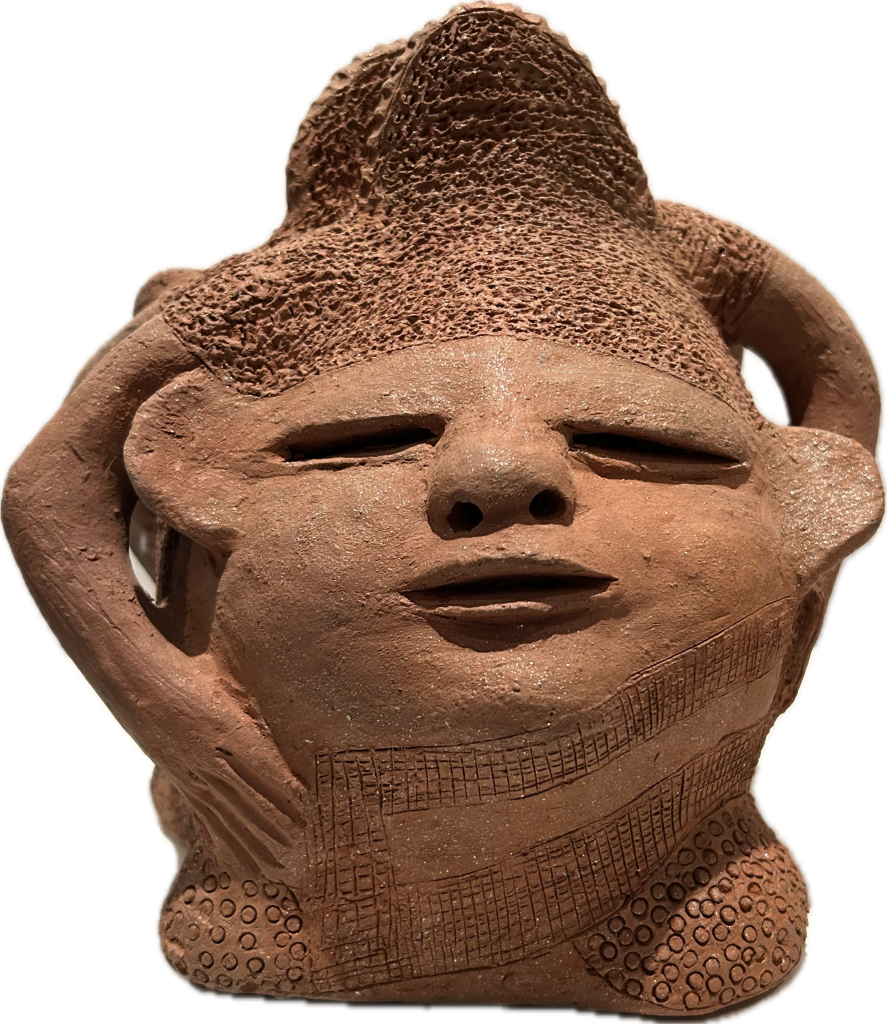
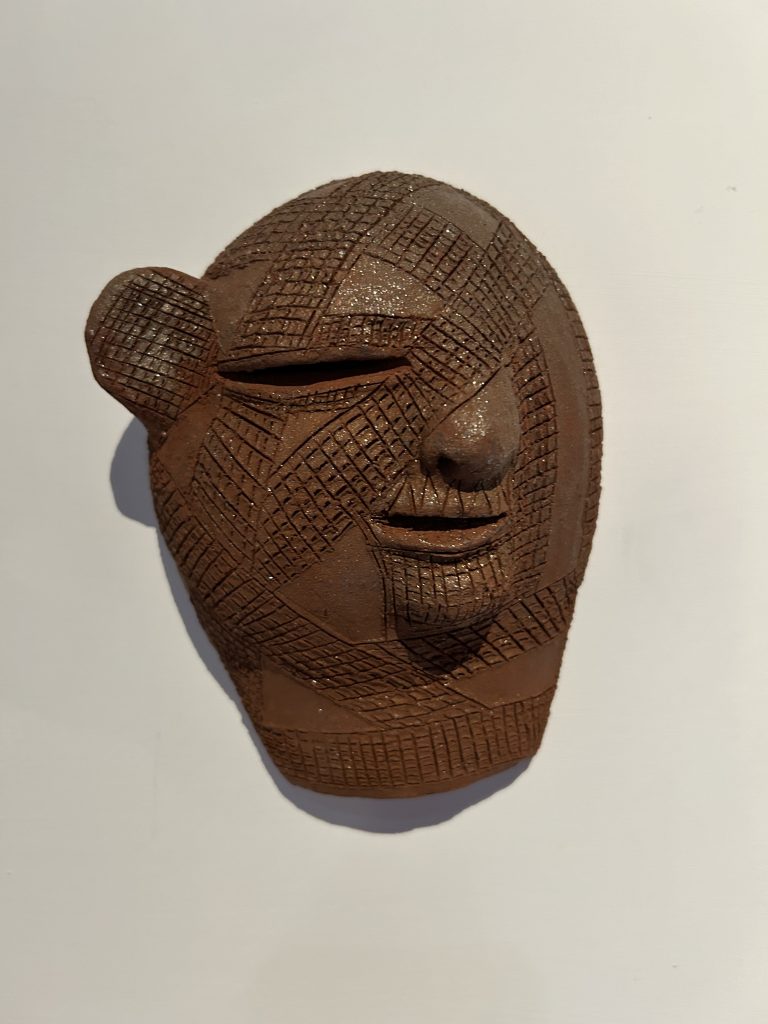
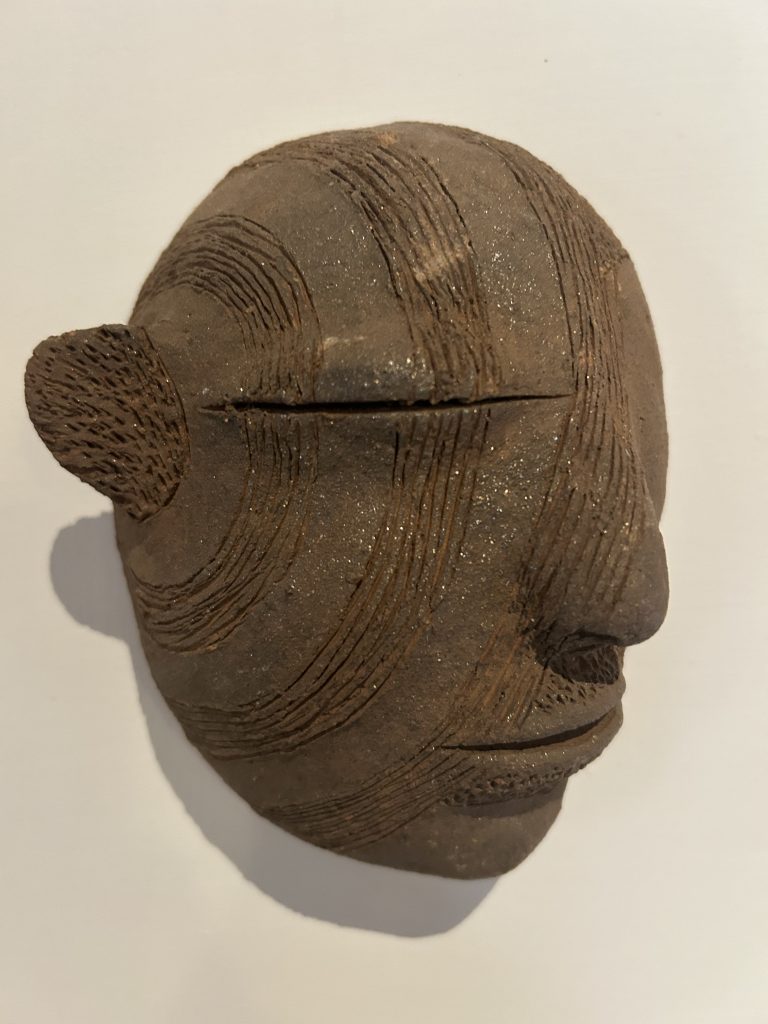
Sadimba’s sculptures depict scenes of daily life. By incorporating graphite as the primary material in her sculptures, the artist creates elegant yet surreal characters inspired by the village reality, addressing important themes such as motherhood, femininity, and the role of women in African society, as well as romantic relationships and family. The faces sculpted and shaped by Reinata are once again her personal interpretation of myths and symbols from Mozambican culture, particularly echoing the features of traditional Makonde masks and the ancestral practice of scarification. The artist herself displays tattoos and scars typical of this tribe on her face. Her works of art are not only historical expressions of the Makonde ethnicity, but also critical reflections on initiation rituals, the hierarchical position of women, men, children, and healers in this culture.
In 1985 facing various difficulties with her young son, Reinata decided to travel to Dar es Salaam to visit her sister. There, she held her first solo exhibition in 1990 at the Nyyumba Ya Sanaa Gallery. In 1992, when the war in Mozambique ended, Reinata decided to return and settle in Maputo, where the Museum of Natural History offered her a space, which since then has functioned as her studio.
Reinata is now considered one of the most important female artists on the African continent. The artist has received numerous awards and her works are represented in various institutions such as the National Museum of Mozambique, the Museum of Ethnology of Lisbon, the United Nations headquarters in New York, and the Modern Art collection of Culturgest, in addition to numerous private collections around the world. She held solo and collective exhibitions in Mozambique, Portugal, Switzerland, Tanzania, South Africa, Denmark, France, Italy, UK, and USA.